The Latest in Books with Mr. Review

In a Situationship.
Situated: Find the People and Places That Bring Out Your Best by Angela Duckworth
Scribner Books
September 1, 2026
352 pages.
An assessment by Mr. Review.
George Orwell said it best: “We have now sunk to a depth at which restatement of the obvious is the first duty of intelligent men.” That goes for intelligent women, too. And Angela Duckworth is just that person. Just in time. Duckworth, earned a PhD in psychology, is a MacArthur Fellow and holds the Rosa Lee and Egbert Chang Professor at the University of Pennsylvania. According to Duckworth’s own website, her TED talk is among the most viewed of all time. Her first book Grit: The Power of Passion and Perseverance is a #1 New York Times best seller. Her credentials speak for themselves. Her books, speak for all of us. Read them and be affirmed, inspired and stirred to achieve greatly.
Angela Duckworth has made it her life’s work to study high achievers. She has wondered out loud and sought answers to why high achievers succeed. Backed by years of study and scientific enquiry, Duckworth’s book Grit, published in 2016, shook academia. Curriculums everywhere at all levels began to introduce rigor as a mainframe. How better to teach grit than to up expectations? This line of thinking spread like wildfire. It was an idea that both right and left could agree on. Who could argue against building a culture of perseverance? It seemed so self-evident, but so necessary to state the obvious. But that was ten years ago.
Thank you, Dr. Duckworth, for reentering the arena. We educators knew there was more than just rigor to becoming a high achiever. Teachers, coaches and even some administrators all know that a positive school culture, collaboration, mentor programs and even the appearance of classrooms make a significant difference. And now we have an authoritative text we can point to and say, “see, this is what experts can now agree on.” Angela Duckworth’s book Situated is that book.
Duckworth is not the first to say that “grit is necessary but not sufficient. The situation matters.” She is authoritatively clear when saying, “Instead of commanding ourselves to work harder, we should seek mentors, peers, physical spaces, and cultures that inspire us to work harder. Instead of urging ourselves to make the best of a situation, we can improve the situation itself.” She imagines facing every challenge with a simple three box strategy – Assess the situation/Have thoughts/Respond. In all things consider space, peers, mentors and culture.
The centrality of culture, we all know, is crucial. By culture Duckworth writes: “Culture includes language – the way we talk. Rituals – our traditions and routines. Artifacts – everything from the way we dress to our tools to the colors that identify us. Norms – how most people behave. Values – what we hold to be important. And identity – who we think we are.” Duckworth’s text makes this clear, but all of us teachers know that such a checklist was paramount on Day One of every school year. And everyday thereafter.
From personal experience it took me several years to fully appreciate the value of a situationship. I was born and bred on the Protestant Work Ethic. My first two years of teaching was all about grit. Then I discovered a professional learning community. I learned from outstanding mentors. I found peers to collaborate. We developed a winning culture by being mindful of space. As a teacher and coach for over thirty-five years grit was important, but not as important as building and sustaining a culture that nurtured excellence. Struggling in your ways? Asses your situation. Think about it. And respond with a new attention to space, peers, mentors and culture. And sorry if we are just stating the obvious.
The Latest in Books with Mr. Review
Lord Have Mercy.
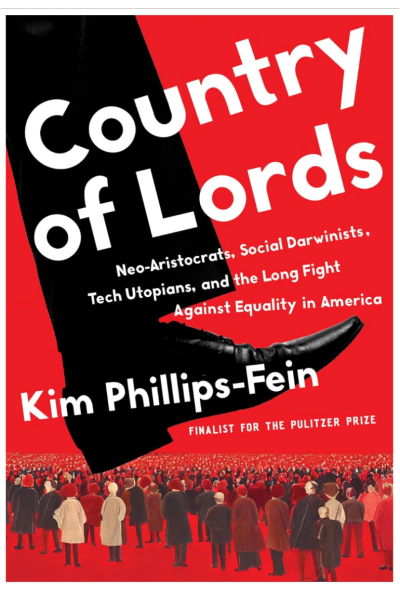
Country of Lords: Neo-Aristocrats, Social Darwinists, Tech Utopians,
and the Long Fight Against Equality in American by Kim Phillips-Fein
W.W. Norton and Company
July 21, 2026
256 pages.
An assessment by Mr. Review.
For a long time now, I have been enchanted by the Levellers. The Levellers were a radical political movement during the English Civil War, mid-17th century, who advocated for popular sovereignty, extended voting rights and legal equality. They became a powerful voice among ordinary citizens and rank-and-file soldiers in the New Model Army. The name “Levellers” was a pejorative nickname voiced by their opponents. Critics accused them of wanting to flatten traditional social classifications, steal private property and equalize everyone’s wealth. Mostly untrue, the Levellers did want equal political rights and freedom under the law. Led by John Lilburne, Richard Overton and William Walwyn, they unsuccessfully worked for universal male suffrage, popular sovereignty, legal equality and religious tolerance. Leaders were arrested, executed and exiled by the governing Lords of England.
At first glance one might find in our Founding Fathers, or hope to find, a kinship with the Levellers. Both projects seem to share objectives. Thanks to this wonderfully researched book of history, Kim Phillips-Fein’s Country of Lords, our governing leaders have also fought diligently to suppress any egalitarian objectives. For some this might come as a surprise. Not so when looking around today. Anti-egalitarian ideas are flourishing. Name calling and demonizing those that seek greater equality has become all too familiar and common. But let us not get ahead of ourselves.
John de Crevecoeur in “The American Farmer” did write in 1782: “We have no princes for whom we toil, starve, and bleed; we are the most perfect society now existing in the world.” Sounds great. Yet as this author points out: “[Our Founders] also wanted to make sure that the new nation would survive …[which] meant preserving the hierarchical arrangement of society with which they were familiar…Without some orderly system to protect legitimate authority, they feared that the popular energies unleashed by the revolution would bring only destruction and tumult.” John Adams could not have made this anymore clear when wrote, “The centuries were formed on an artful idea, to make power accompany wealth.” His Administration went on to pass the Naturalization Act, the Sedition Act and the Alien Acts. Fein writes: “All of these reflected the underlying discomfort of the new nation’s elite with the possibility of a radicalized democratic public, especially one dominated by new immigrants. The language of slavery gave Americans the ability to defend economic inequality. The framework of hierarchy was innate to a slave society.” We remain today the most economically unequal society in the world.
Kim Phillips-Fein’s book thus is arranged to explore those groups who sought to protect this “natural” inequality. She looks at our natural aristocrats, our social Darwinists, our utilitarian racists, the market meritocrats and our technocracy barrens.
One of our chief economic architects, Milton Friedman wrote: “Life is not fair. It is tempting to believe that government can rectify what nature has spawned” – but it could not, and should not try to do so, else it would create problems far greater than any it could resolve. In the abstract, equality gets written into our textbooks. In the concrete, however, it ever remains a constant fight.
Wasn’t that the fight in 1776? “We hold these truths to be self-evident, that all men are created equal.” After reading this book, that war is still being fought. Which side will you join?
The Latest in Books with Mr. Review

No Kings. Really!
The President Who Would Not Be King by Michael McConnell
Princeton University Press
February 15, 2022
440 pages.
An assessment by Mr. Review.
The No Kings rallies have garnered sizable crowds. The rallies on March 28, 2026, for example, which included 3,300 events across all 50 states counted over 8 million participants. The political movement claims our democracy is imperiled by executive overreach. President Trump, they say, treats his authority as absolute. Authoritarianism seems welcomed. Yet not everyone would agree. Republican Speaker of the House Mike Johnson has called these gatherings as “hate America rallies.” The people in the streets are radicals and represent dangerous voices. Furthermore, the President is operating within the intent of the original constitution. Many Republicans have grown comfortable advocating for the unitary executive theory. The unitary executive theory argues for a powerful president with many unilateral powers. If this sounds like another partisan bickering contest over the popularity of their own, think again.
Fighting over the power of the American presidency is not new. And it certainly should not be a partisan fight. Democrats and Republicans, alike, have fought to make the constitutional concepts of the separation of powers and checks and balances real. The best work of political science on this subject, in fact, comes from the notable conservative Michael W McConnell. His book is entitled: The President Who Would Not Be King: Executive Power Under the Constitution. McConnell is a star in conservative circles. He held the conservative line when teaching at Harvard and Stanford. He was appointed as a federal judge to the Tenth Circuit Court of Appeals by President George W. Bush. His conservative credentials make certain he cannot be accused of Trump Derangement Syndrome.
McConnell makes clear that our Founding Fathers wrestled mightily over the office of president. After fighting a revolution against King George, were we to create an executive with the effective powers of a king? Would our chief executive share the many prerogative powers of the English King? Granted, the Founder’s answer was not clear. When addressing this issue from a scholarly perspective, McConnell makes one thing certain. The issue must be analyzed historically, institutionally, pragmatically and legally but not with partisan lenses. This commitment makes McConnell a scholar deserving of our attention. This book works, no matter what party is in power.
McConnell quotes Justice Brandeis who said: “the doctrine of the separation of powers was adopted by the Convention of 1787…to preclude the exercise of arbitrary power.” It was not partisan then; it cannot be partisan today. The revolutionary spirit abhorred prerogative powers. The exercise of executive discretion would not have been tolerated. McConnell cites that “our constitution makes no provisions for extraconstitutional powers in time of emergency.” All prerogative powers lie within the limits of law. But what about the Commander-in-Chief Clause? McConnell states: “the President’s command over the militias only when they are called into active service to the Union, which could be done only with permission of Congress.” Wow. Things certainly have changed.
This book makes clear that “the American Founders were the first in the world to create a powerful, unitary, independent chief executive officer in the context of a system where the bulk of governing authority would be held by the legislative branch.” The Founders would not agree with Trump who recently was quoted as saying, “When somebody is the President of the U.S. the authority is total.” Phew. But do not trust me. Trust Michael W. McConnell an outspoken conservative. No Kings. Really.
The Latest in Books with Mr. Review
The Pirates of Pedant.
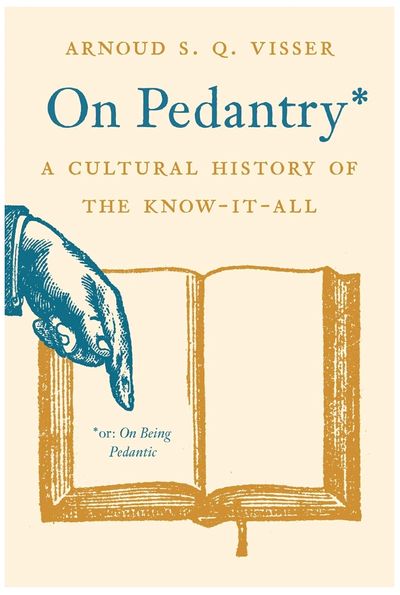
On Pedantry: A Cultural History of the Know-It-All by Arnoud S.Q. Visser
Princeton University Press
November 4, 2025
344 pages.
An assessment by Mr. Review.
As a young boy the hilarious TV comedy Get Smart, starring Don Adams as Agent 86, made no excuses about what it was poking fun at. The idea of a secret agent, aka James Bond, with incredible gadgets, an unyielding physical prowess along with an infallible problem-solving ability may entertain us but it is ludicrous. Getting smart is overrated. Get Smart was making fun of us for thinking otherwise. This idea is not just fodder for comedy; there is no shortage of serious academic works that have documented our affinity for anti-intellectualism. If you are interested start with Richard Hofstadter’s Pulitzer Prize winning Anti-Intellectualism in American Life (19630. Next read The Death of Expertise (2017) by Tom Nichols. And do not forget Susan Jacoby’s The Age of American Unreason (2009). Yet do I dare say authoritatively, add another to this list. Read Arnoud S.Q. Visser’s On Pedantry: A Cultural History of the Know-It-All.
Visser, the academic director of the Dutch Huizinga Institute is a notable historian with a keen eye for cultural relevance. The fact of the matter is that anti-intellectualism is currently in vogue not just in the United States, but globally. And frankly, this is nothing new. Visser traces this narrative going all the way back to ancient Greece when the new upstart teachers, the Sophists, who were once admired but ultimately became targets of great disrepute. This disdain for the Sophists was rooted in their fallacious reasoning and use of eristics. They argued for the sake of argument. Socrates accused them of being relativists and seekers of glory rather than truth. These devious sophists became pedantic. They flaunted their knowledge, were community show-offs but did little to help. Visser points out these pedantic characteristics: intellectual pretension, obscure language, fault finding, blame giving occupation with trivial knowledge. These characteristics may have been first labeled by the ancient Greeks, but they still find a residence in our world today.
Visser’s readable narrative surveys the cynics of the Roman period, the medieval Scholastics, the foolish humanists of the Renaissance, the savants of the Enlightenment, the effete elitists of the revolutionary world and the mad scientists of the modern era. A leading take away from this entertaining display of erudition is the remarkable continuity of these historical tropes. It is not that we hate smarts. We hate it when the know-it-alls abuse their talents for malicious purposes and nefarious ends. We hold in contempt pedantry.
As a teacher himself, Visser concludes with an important lesson. He writes:
Recurrent strategies and stereotyping and caricaturing reveal that pedants are not unique to their own environments. They point to a cultural script about appropriate and inappropriate uses of intellect.
Fyodor Dostoyevsky said it similarly: “It takes something more than intelligence to act intelligently.” But read carefully between the lines here. Ignorance is not bliss. We need to get smart. Thomas Jefferson put it this way: “There is a natural aristocracy among men. The grounds of this are virtue and talents…There is also an artificial aristocracy founded on wealth and birth, without either virtue or talents…”
It does not take long to look around our world to see a small cadre of billionaires who yield unprecedented power and authority. One can even call himself President. We grant them unimaginable privileges because we think they have somehow earned it. We overlook their vices and inappropriate behaviors. We grant them the keys to our cities and let them design policies that further enrich themselves. They are modern day sophists. They are guilty of pedantry. They are exactly what Visser spends 344 pages describing. In no small way, with their pedantic behavior, they are intellectual pirates.
Maybe we learn best through our amusements. This reminds me of “Major-General’s Song.” “Major-General’s Song” is a patter song from Gilbert and Sullivan’s 1879 comic opera The Pirates of Penzance. The pedantic polymath is rib-tickling from the opening stanza:
"I am the very model of a modern General
I've information vegetable, animal and mineral.
I know the kings of England, and I quote the fights historical
From Marathon to Waterloo, in order categorical;
I'm very well acquainted, too, with matters mathematical,
I understand equations, both the simple and quadratical,
About binomial theorem I'm teeming with a lot o' news,
With many cheerful facts about the square of the hypotenuse."
What makes this so tragically funny is that we all know that person, or someone much like him. Maybe you voted for someone like him. Maybe you are that person.
Oh no, am I that person for quoting lines from The Pirates of Penzance to make a point? Good grief. Agent 86 would have said, “Sorry about that, Chief.”
The Latest in Books with Mr. Review
Bet You Have the Right to Lose It All.
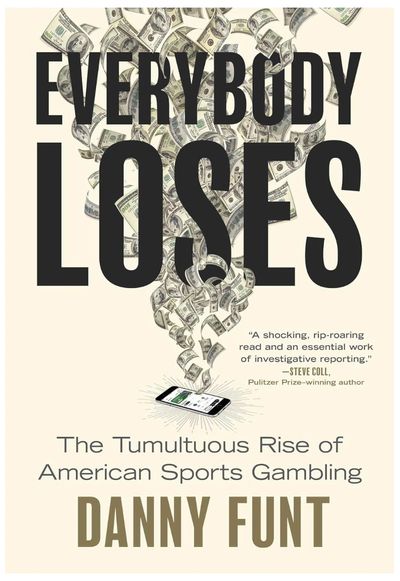
Everybody Loses: The Tumultuous Rise of American Sports Gambling by Danny Funt
Gallery Books
January 20, 2026
320 pages.
An assessment by Mr. Review.
Bet you did not know this, the word has always been associated with wrongdoing, misconduct and transgression. The word “bet” can be traced all the way back into the 16thcentury. It was associated with crime. The idea of wagering and gambling, however, goes back even before written history. Archaeologists have found numbered dice in nearly every and all civilizations. Seemingly gambling, gaming and laying down bets has been all too commonplace throughout history.
Yet so too were laws prohibiting and regulating the act of gambling. Ancient Egypt and its laws had strict language limiting the act of wagering. China did also. The Roman Emperor Justinian in his Codex went so far as to make dice games illegal and provided the means for any gambling losses to be recovered, even fifty years later. Every major religious system has strong language against wagering. The first law in America limiting gambling was passed in the Massachusetts Bay Colony in 1638. This law outlawed the possession of playing cards, dice and gambling devices. The spirit of these laws remained constant up until our lifetime. My have things changed.
Commercial sports betting is now legal in at least 38 states and Washington D.C. The U.S. sports gambling industry alone, in the last year, generated nearly $150 billion worth of wagers. An estimated 25% of U.S. adults actively place sports bets. The highest sports gambling rates are among Gen-Z, Millennial and male participants. Roughly 95% of all sports gamblers lose money, overall. Reportedly, 30% of sports bettors carry debt. Upwards to 10 million Americans suffer from some level of gambling disorder. Problem gambling is associated with the highest suicide rate of any addiction.
Who can we thank for this? Surprisingly, the United States Supreme Court.
First, let me digress. Danny Funt’s book Everybody Loses: The Tumultuous Rise of American Sports Gambling provides an excellent primer on these issues. Funt poses an important set of questions to frame this story: “What do we stand to gain, and what are we willing to lose?” Funt tries to wade through the research. He follows the rise of two leaders in the industry, FanDuel and Draft Kings. Stories of athletes fixing contests is haunting to all of us who love the game. The book also details the gambling industry’s attempt to insulate itself from criticism. “Gambling can’t be a problem as long as you can afford it,” is one of their claims. And the omnipresence of the remarkably cruel and vague mantra - “bet responsibly.” The book fails by being far more descriptive than prescriptive. Most such books do this. Funt does close the book by bluntly saying, “A more politically convenient revenue stream for states then raising taxes? If that’s all we stand to win, it will seem to me like an extraordinary price to have paid.”
The price we have paid, in the end, goes far beyond the damage rendered by gambling. The U.S. Supreme Court has been exposed for being just as political, just as attune to public opinion, and willingness to be corrupted as their other two dysfunctional branches. And worse, they cloak it in dogmatic legalese that hides their hypocrisy and two-faced double-standards. Shame on you and shame on us for not noticing.
The U.S. Supreme Court case that obliterated the damn and released the waters of sports gambling anytime, anyplace and at any cost was Murphy vs. NCAA (2018). This case knocked down numerous precedents but was specially asked to rule unconstitutional The Professional and Amateur Sports Protection Act (1992) a recent law passed by Congress. They did this with remarkable ease. In doing so they ruled unconstitutional any federal law that prohibited states from authorizing sports betting. The 6-3 decision with a majority opinion written by Justice Samuel Alito relied heavily on the “anticommandeering” principle. Alito wrote:
“The anticommandeering doctrine may sound arcane, but it is simply the expression of a fundamental structural decision incorporated into the Constitution, i.e., the decision to withhold from Congress the power to issue orders directly to the States.”
Alito and his fellow five justices concurred that the Tenth Amendment inspired “anticommandeering” principle protects liberty, promotes accountability and prevents Congress from shifting costs of regulation to the states. In the abstract this sounds politically correct. Yet it does not require a legal scholar to think of a few examples where Congress and its laws in fact do quite the opposite. There are no shortages of examples where Congress issues orders directly to the States. Here are just a few: Medicaid administration, Occupational Safety Codes, education policy, immigration enforcement, and most recently Real ID.
The Court acted in error. Now we face the fall out. Not only is the integrity of our favorite game in doubt, not only are millions suffering from addiction, not only has a generation been raised on the profitability of idleness but our Court and its malfeasance have been exposed. The Court, created to protect us has done great harm. Danny Funt’s book Everybody Loses: The Tumultuous Rise of American Sports Gambling tells some of this story. Feeling certain that betting on a terrible end is already a done deal.
The Latest in Books with Mr. Review
Keeping It Real.
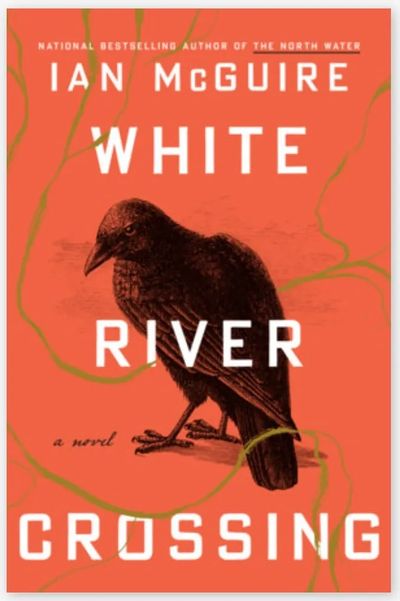
White River Crossing by Ian McGuire
Crown Publishing
February 24, 2026
279 pages.
An assessment by Mr. Review.
Admittedly, Ian McGuire is an acquired taste. This notable British author, academic and literary critic has been recognized and criticized for his embrace of literary realism. McGuire’s latest, White River Crossing, is no exception. This brutal piece of historical fiction is set in the harshest of environments of the Canadian Hudson Bay region during the mid-18th century. There is realism aplenty. Sentimentality will not be found. For this reason, many leave reading McGuire with a dose of disappointment. It was these readers that T.S. Eliot must have had in mind when he wrote, “Humankind cannot bear very much reality.” Bear with McGuire, he is one of our finest novelists.
To understand this book, and more specifically Ian McGuire, one might consider his earliest effort at nonfiction. McGuire wrote the definitive biography of another novelist who practiced pragmatic realism, Richard Ford and the Ends of Realism(2015). Ford gained notoriety for his Pulitzer Prize winning novel Independence Day (1995). Ford’s commitment to realism, as opposed to his romantic forebearers, builds rich narratives filled with recognizable characters, plausible plots and social texture. His stories lack those a-ha moments. There will be no abrupt revelations. No deep metaphysical truths revealed. The ordinary, for Ford, is where people live. All characters, no matter their lot in life, receive dignity. In Independence Day a character states:
"A sad fact, of course, about adult life is that you see the very things you'll never adapt to coming toward you on the horizon... You tell yourself you'll have to change your way of doing things. Only you don't. You can't".
For Ford and his characters, the most important acts of agency involve survival and self-help. Ian McGuire not only writes about Ford’s literary realism but certainly follows his example in his own work. White River Crossing is his best effort yet.
This fictional story takes place in a faithful rendering of a 1760s sub-Arctic Canadian wilderness. It starts in the Prince of Wales Fort along the Hudson Bay. The Englishman who currently oversee this remote trading post have organized a secret expedition to find rumored gold in the vast wilderness to their north. It is an environment that tests the bravest and would require the help of indigenous guides who have their own complex relationships to navigate. As the expeditionary group drives deeper into the wilderness, they are confronted with scarcity of both supplies and character. Confrontations between the aims and outcomes of the Englishman are only part of the story. Conflict between hostile and unfriendly Northern Indians and Inuit bands only make this expedition anything but romantic. It all feels so real.
McGuire has noted that the best stories are both plausible and surprising. By placing this story in a world far removed from our own, we realize how similar the human condition is. It also lives up to what Hilary Mantel described as the benefit of this type of literature when she wrote, “History offers us vicarious experience.” Even when characters in unfamiliar context continue to make bad choices, we are left with something all too recognizable. The seeking of gold drives this story, but the allusive quest for survival is so much more valuable. It was as if another great realist, Ralph Waldo Emerson, was whispering breath into every character in this book: “Nothing is secure but life, transition, the energizing spirit.” This spirit struck me as I turned every page without stopping.
The Latest in Books with Mr. Review
Duke It Out
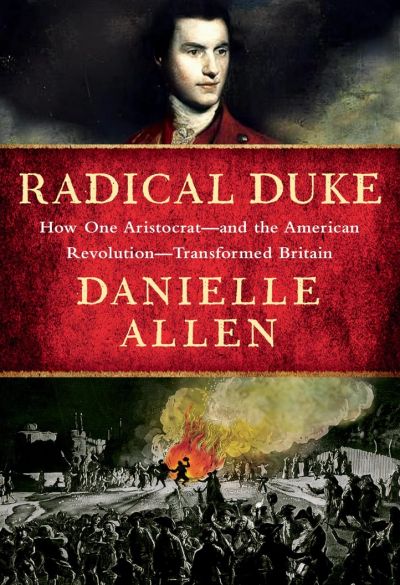
Radical Duke: How One Aristocrat – and the American Revolution – Transformed Britain by Danielle Allen
Liveright Books
June 16, 2026
464 pages.
An assessment by Mr. Review.
Tens of thousands of books covering the Revolutionary War, the framing of our Constitution, and biographies of the Founding era fill our libraries. Recent 250th anniversary celebrations of the United States has added hundreds more. They all claim new insights. I hate to be the skunk at the garden party, but the genre feels tired. Danielle Allen’s newest book Radical Duke energized me, again. Thanks to Allen’s brilliant original research and new discoveries, it is time to revisit that fight. It is time to “put up your Dukes” at least one more time.
Danielle Allen, along with her Harvard colleagues, found in 2015 the Sussex Declaration. This rare 18th-century parchment manuscript is a copy of the American Declaration of Independence. It was first found in a catalogue at the West Sussex Record Office in Chichester, England. The only other such original manuscript is the Matlack Declaration kept in Washington D.C. More importantly, Allen claims this Sussex Declaration would have been found in the library of Charles Lennox, the Duke of Richmond. In direct contrast of his standing, the Duke of Richmond was accused of levelling and republican principles. He fought against the corruption and incompetence of the British Crown and Parliament during the 1770s and 1780s. Saving Britain, he had come to believe, meant liberating America.
The Duke of Richmond’s life was characterized by irrepressible boundary breaking. He had a taste for conspiratorial confidences, and early flickers of political ambition. He scandalously introduced a bill to extend the franchise to all adult men in Britain over the age of 21. Most interesting to our story is that the Duke of Richmond, Allen has discovered, was the driving influence behind and patron of the “The Letters of Junius.”
In total there were 61 Junius Letters. There were numerous radical writers. All were linked in some way to the Duke of Richmond. Foremost on this list was Thomas Paine, Edmund Burke and James Burgh. Notable quotes found in these radical essays include: “The integrity of men is to be measured by their conduct, not by their professions,” “The right of election is the very essence of the constitution,” and “The liberty of the press is the Palladium of all the civil, political and religious rights of Englishman.” Colonial America read is all.
On May 18, 1770, the Duke of Richmond addressed the House of Lords. He repudiated the current colonial policies relating to America. He called them the “depravity of principle.” The duke went beyond words. He actively promoted, supported and energized radical opinions. Arguably, there is no Thomas Paine, no “Common Sense,” no “The American Crisis” without the early support of the Duke of Richmond.
These connections between the Duke of Richmond, Thomas Paine, and the ideas and policies that drove the American Revolution and our founding documents is a new addition to our story. Danielle Allen has again given us new ways to marvel at an old and tiresome story. Her scholarship always reminds me of one of my favorite Mona Caird quotes: “We are governed not by armies and police but by ideas.” The militarists among us always claim victory in their actions. Time and time again when they boast about “duking it out,” the truth is that it is the ideas of the Duke that mattered most.
The Latest in Books with Mr. Review
Black and White and Read All Over
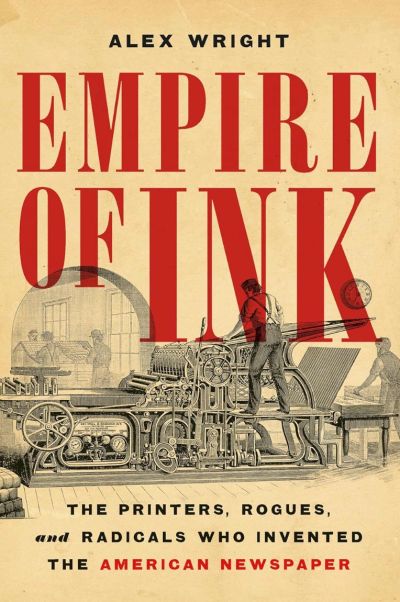
Empire of Ink: The Printers, Rogues, and Radicals Who Invented the American Newspaper by Alex Wright
Basic Books
June 16, 2026
384 pages.
An assessment by Mr. Review.
It was a bad joke back then when I was in 1stgrade, and even worse now. “What is black and white and [read] all over?” A Newspaper. Back in the 1960s this always got me a giggle. Today, in addition to a few tears, it would be more expected to get a “what is a newspaper?” Back when I was in 1stgrade, 80% of Americans read a daily newspaper. It was our primary source for news. Today, for anyone Gen Z or younger, less than 5% read a newspaper. Since 2005, 1/3 of all U.S. newspapers have closed. 2/3s of working journalists have lost their jobs. Fretting about the death of the American newspaper has become quite commonplace for us Baby Boomers. The demise of our local papers is just another piece of evidence of our cultural apocalypse. Right?
The medieval demon, Titivilus, who haunted monastic scribes apparently still haunts us. Many lament and grieve the demise of national and local newspapers. Recently a Senator wrote, “The decline of local news isn't just a business crisis; it's a fundamental threat to American democracy." And another prominent voice said, “Every time a newspaper dies, even a bad one, the country moves a little closer to authoritarianism.” Such sentiments are seemingly everywhere. Due to declining subscriptions to traditional print news sources, is our democracy sick?
Empire of Ink: The Printers, Rogues, and Radicals Who Invented the American Newspaper by Alex Wright is just what the doctor ordered. Everything will be OK. And more so, we are living through what was more common than not. Note Wright’s primary thesis:
“This book argues that the nineteenth-century American press functioned as a complex information ecosystem in its own right: self-organizing, decentralized, participatory – and closer in structure and form to today’s digital networks than the mass media landscape of the twentieth century. This ecosystem took shape not just in metropolitan publishing centers but also in countless small-town and rural printshops that served the communities where most Americans actually lived.”
Wright claims our current news ecosystem resembles historical norms more so than we think. The widely read national mass media newspapers like the New York Times and Wall Street Journal were the outlier. Worse, their ecosystem was not better than what came before.
Wright’s book documents the fascinating history of the American newspaper. The United States, he chronicles, in a very real sense, “printed itself into existence.” Sensationalism, luridness, scandal and overstatement was always present.
Granted, Alexis de Tocqueville saw the press as nothing less than the essential scaffolding of civil society. But we are too literal to imagine he was talking exclusively of the American newspaper. Today there are 600 million+ content creators worldwide and thousands of digital news organizations. The press may look different to old codgers like me, but that does not mean we have lost access to critical information. Arguably we are being overwhelmed by access to news. Page Smith is still right: “[America] is held together not by politics, but by words.” The task of the citizen is to become news literate. How best to discern the news in the Information Age is our challenge.
“What is black and white and [read] all over?” Too soon?
The Latest in Books with Mr. Review
WWE Goes to Washington
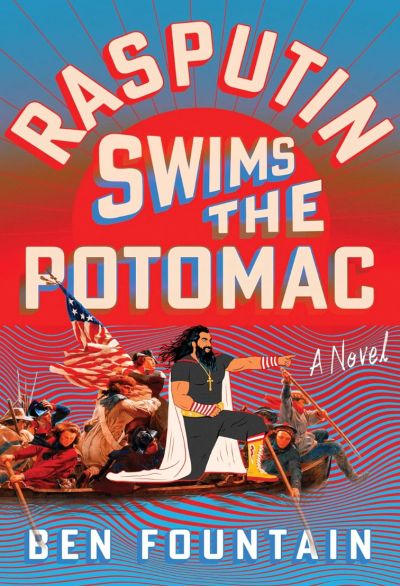
Rasputin Swims the Potomac by Ben Fountain
Flatiron Books
June 9, 2026
416 pages.
An assessment by Mr. Review.
If you have not watched the Jimmy Stewart film Mr. Smith Goes to Washington (1939) you need to. Stewart stars as Jefferson Smith, a somewhat naïve remote Boy Scout of a man, who finds himself appointed to serve as a U.S. Senator. While in office Smith is expected to simply defer to his state’s other senior senator who is bank rolled by a corrupt political machine. The simpleton Smith is aghast at what he finds behind the curtain in DC and defies his mentors by taking on the machine and winning in a remarkable nod to idealistic democrat practice. The film is based on an unpublished story by Lewis R. Foster who took as his source material from the exploits of Senator Barton K. Wheeler. Senator Wheeler, from the sticks of Montana, exposed the corrupt Warren G. Harding Administration.
When producers of the film Mr. Smith Goes to Washington submitted their script to the Hollywood censors they were warned: "[W]e would urge most earnestly that you take serious counsel before embarking on the production of any motion picture based on this story…The generally unflattering portrayal of our system of Government, which might well lead to such a picture being considered, both here, and more particularly abroad, as a covert attack on the Democratic form of government.” The film was made, nonetheless, and many Washington insiders pushed to obstruct a wide release.
How far we have come. Or have we?
The outrageously funny or tragic storyline behind Ben Fountain’s new political satire Rasputin Swims the Potomac makes the plot of Mr. Smith Goes to Washington look like child’s play. In this book the current openly corrupt president is appalled that he faces a challenge from within his own party to his unprecedented third term. The challenger is professional wrestler turned Russian Orthodox faith healer who goes by the stage name of Rasputin. All sorts of illegal manipulations, media obstructions and obvious abuses of power by the president cannot impede the dawning of Rasputin’s “New Awakening.” When it is exposed that Rasputin is really Patrick Strickland, and he is carrying on an affair with the president’s wife one might expect that public opinion might change. Rather, this WWE athlete claims a penitent heart and will serve his penance by swimming a grueling course in the Potomac River. If he succeeds it will be the Lord’s will for him to remain in the race and become president. A kayfabe script has never been more dramatic. Especially when the sitting president unleashes all sorts of attempts to prevent Rasputin from succeeding.
The book is filled with historical references both current and old that perhaps only political junkies will pick up. Nevertheless, in fiction, we read the truth. Fountain is basing this storyline on events and personalities that we have watched and listened to each night on the news. Fountain redacts in the text every time the president is named. It would be easy to fill in that blank with the name Trump. Granted, fictional political tales are not for everyone. But a quick survey of the classics in this genre all shares something in common. For me those classics are Robert Penn Warren’s All the King’s Men (1946), Allen Drury’s Advise and Consent (1959) and Anonymous’ (Joe Klein) Primary Colors (2006). All these books, and many others like them, expose the corruption that has always been hidden behind the loyalty oath of American exceptionalism. American politics and professional wrestling have always shared a kinship to staging events and passing them off as real.
When Mr. Smith Goes to Washington hit the silver screen there was outrage. As there was when the books mentioned above were published. When Senator Wheeler exposed the Harding Administration, he was later investigated by the Justice Department and accused of being a communist.
You might read this book and simply say, “Ho-hum.” But then again, maybe your own inner Jefferson Smith might whisper in your ear and say, “enough is enough.” Here, We the People still rule.